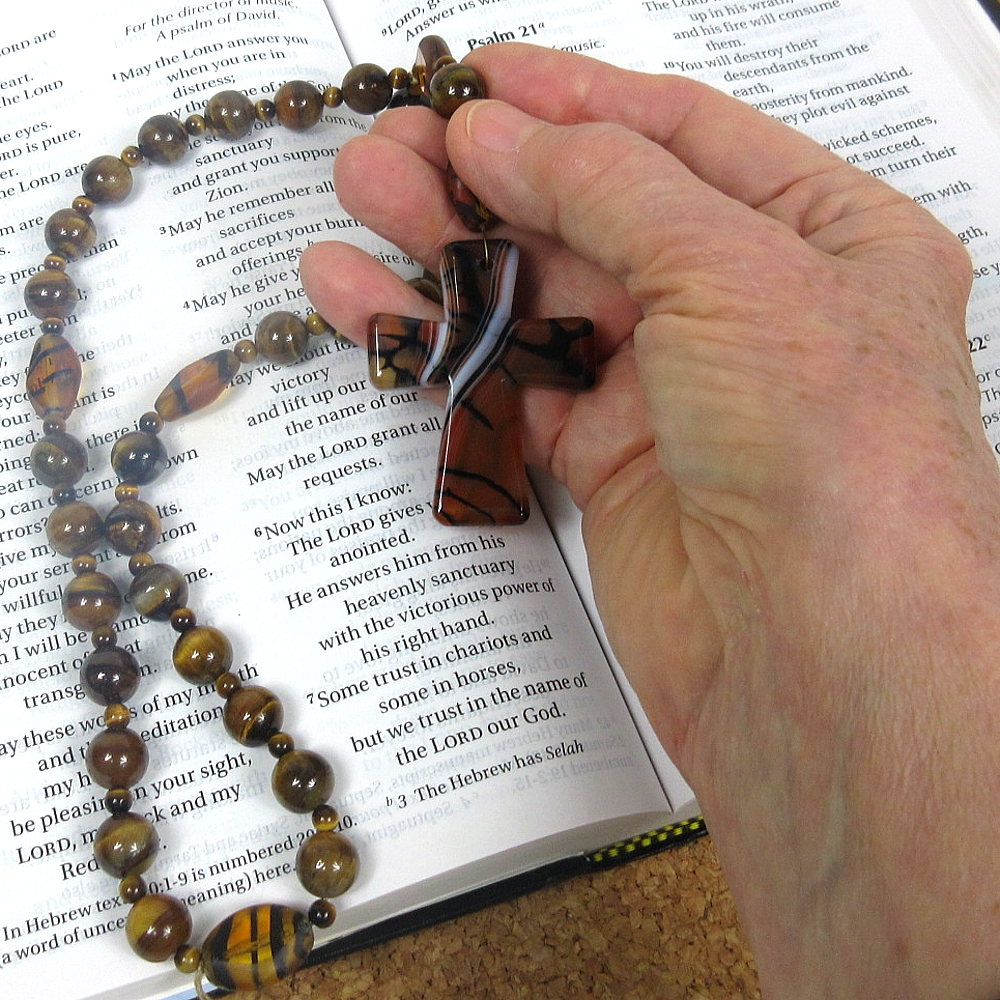
Protestant prayer beads, sometimes called Anglican prayer beads or the Anglican rosary, offer a simple and meaningful way to enter into prayer. They provide structure without rigidity, helping you slow down, stay present, and pray with intention.
You can also learn how to pray step by step here.
How to Use Protestant Prayer Beads (A Simple, Meaningful Guide)
You will see both names used throughout this post. The physical pattern is the same, and for simplicity, this article primarily uses the term “Protestant prayer beads.”
If you would like a deeper explanation of the terminology and distinctions, see:
Protestant vs. Anglican Prayer Beads
This guide explores how these beads are designed, where they come from, and how they can be used in everyday prayer.
What Are Protestant Prayer Beads?
Protestant prayer beads are a set of 33 or 34 beads arranged in a repeating pattern that guides prayer through a gentle rhythm.
Unlike some other forms of prayer beads, there are no required prayers or fixed formulas. They are designed to support personal, meaningful prayer in a way that fits your needs.
If you are new to prayer beads, you may find it helpful to begin with a simpler introduction:
What Are Protestant Prayer Beads?
Structure of Protestant Prayer Beads
At first glance, Protestant prayer beads may appear intricate, but their structure is simple and consistent.
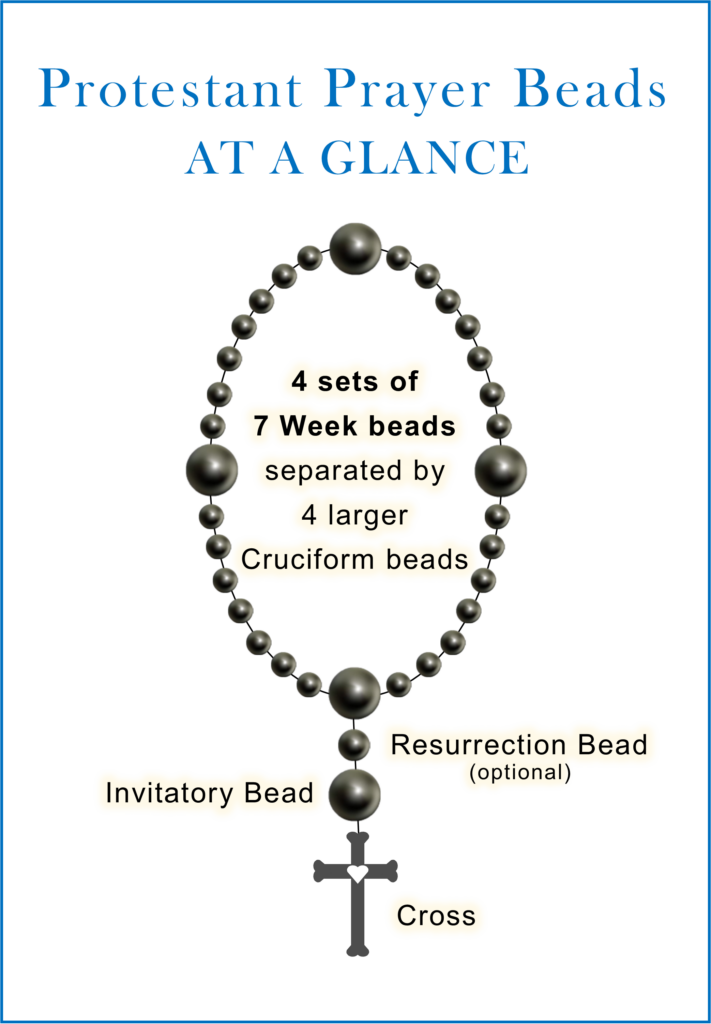
A traditional full set includes:
- 1 cross or pendant
- 1 Invitatory bead
- 4 Cruciform beads
- 28 Week beads (in four groups of seven)
This creates a total of 33 beads, often associated with the years of Christ’s earthly life.
Some sets include an optional Resurrection bead placed between the Invitatory bead and the first Cruciform bead. Since the 33 beads represent Christ’s life on earth, the Resurrection bead represents His life after death.
The pendant is often a cross, but it does not have to be. It can be any symbol that is meaningful to your faith.
Bead Diagram
How the Beads Are Organized
The beads are arranged in a continuous loop, allowing prayer to move in a steady, unbroken rhythm.
The pattern typically follows this order:
- Cross or pendant
- Invitatory bead
- Optional Resurrection bead
- First Cruciform bead
- Seven Week beads
- Second Cruciform bead
- Seven Week beads
- Third Cruciform bead
- Seven Week beads
- Fourth/First Cruciform bead
After completing the circle, the prayer does not simply stop.
Instead, you exit the circle by moving:
- From the final Cruciform bead
- Through the Optional Resurrection bead (if present)
- To the Invitatory bead
- Ending at the cross or pendant
This return path creates a natural closing to the prayer experience.
How Protestant Prayer Beads Are Used in Prayer
Protestant prayer beads are designed to guide your attention, not control your words. They offer a gentle rhythm that helps you slow down, stay present, and enter more deeply into prayer.
There is no single “correct” way to use them. Instead, the beads provide a simple structure that you can adapt to your own needs, whether you are praying through a specific concern, reflecting on scripture, or simply sitting quietly in God’s presence.
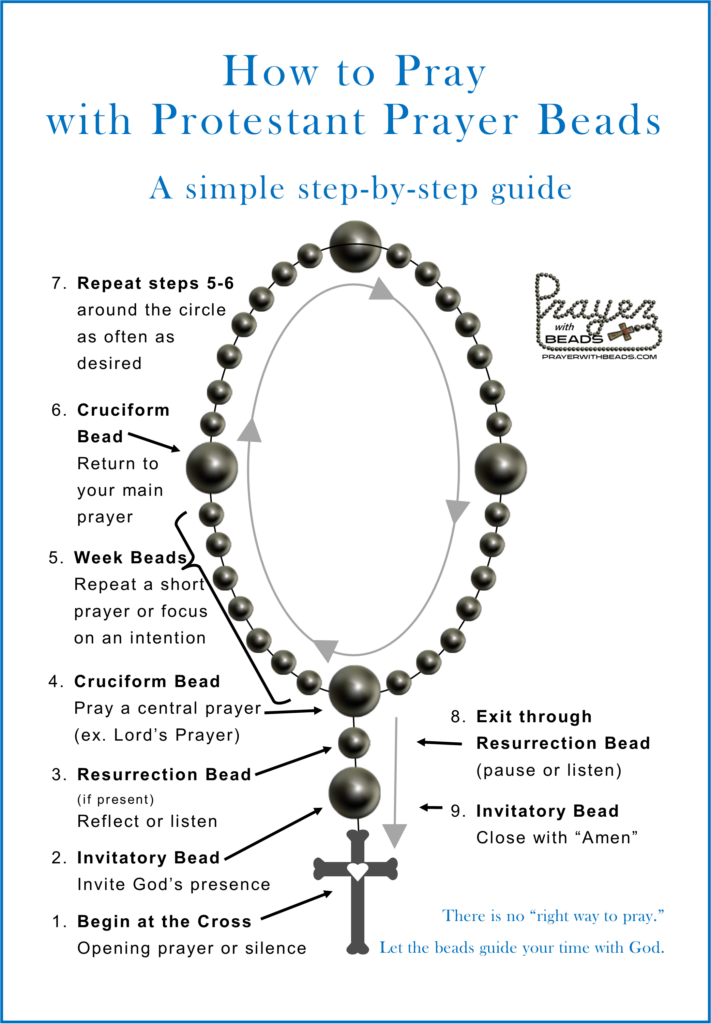
This simple visual guide shows how to move through the beads in prayer:
Prefer a printable version you can keep nearby?
Download the Protestant Prayer Beads Quick Guide (PDF)
Includes:
- Chaplet prayer method
- Bead structure diagram
- Step-by-step prayer guide
You may move through the circle once, or continue for several rounds.
As you move through the beads, your fingers follow a pattern while your mind and heart remain focused on prayer. Many people find that this physical movement helps quiet distractions and brings a sense of calm.
You may choose to pray the same words on each bead, or allow your prayer to shift as you move along. Some use short repeated phrases. Others reflect on a passage of scripture. Some simply pause and listen.
The structure is there to support you, not limit you.
If you would like additional guidance, you may find it helpful to follow a structured, topic-focused prayer designed specifically for use with the beads.
Explore guided prayer videos here:
Guided Prayer Videos for Use with Protestant Prayer Beads
A Simple Prayer Flow Example
If you are unsure where to begin, this simple pattern can help you get started. You can follow it exactly or adjust it in any way that feels meaningful.
Cross or Pendant
Begin with a moment of stillness or a short opening prayer.
Invitatory Bead
Invite God’s presence. For example, “Be with me, Lord, as I pray.”
Optional Resurrection Bead
Pause briefly. You may reflect on new life, hope, or simply listen in silence.
Cruciform Beads
Pray a central prayer, such as the Lord’s Prayer or another meaningful prayer or phrase.
Week Beads
Repeat a short phrase or focus on a specific intention.
Continue through the circle at a steady pace.
When you are ready to close, move out of the circle by passing through the Resurrection bead (if present), then the Invitatory bead, and ending at the cross or pendant.
If you are looking for prayer beads designed specifically for this kind of use, you may wish to explore sets that are created with both beauty and prayerful intention in mind.
Explore handcrafted Protestant prayer beads here:
Protestant Prayer Beads
Chaplets, Bracelets, and Necklaces
Protestant prayer beads are most often seen in a full circular set, but they are also used in other forms that offer different rhythms of prayer.
One of the most common variations is the chaplet.
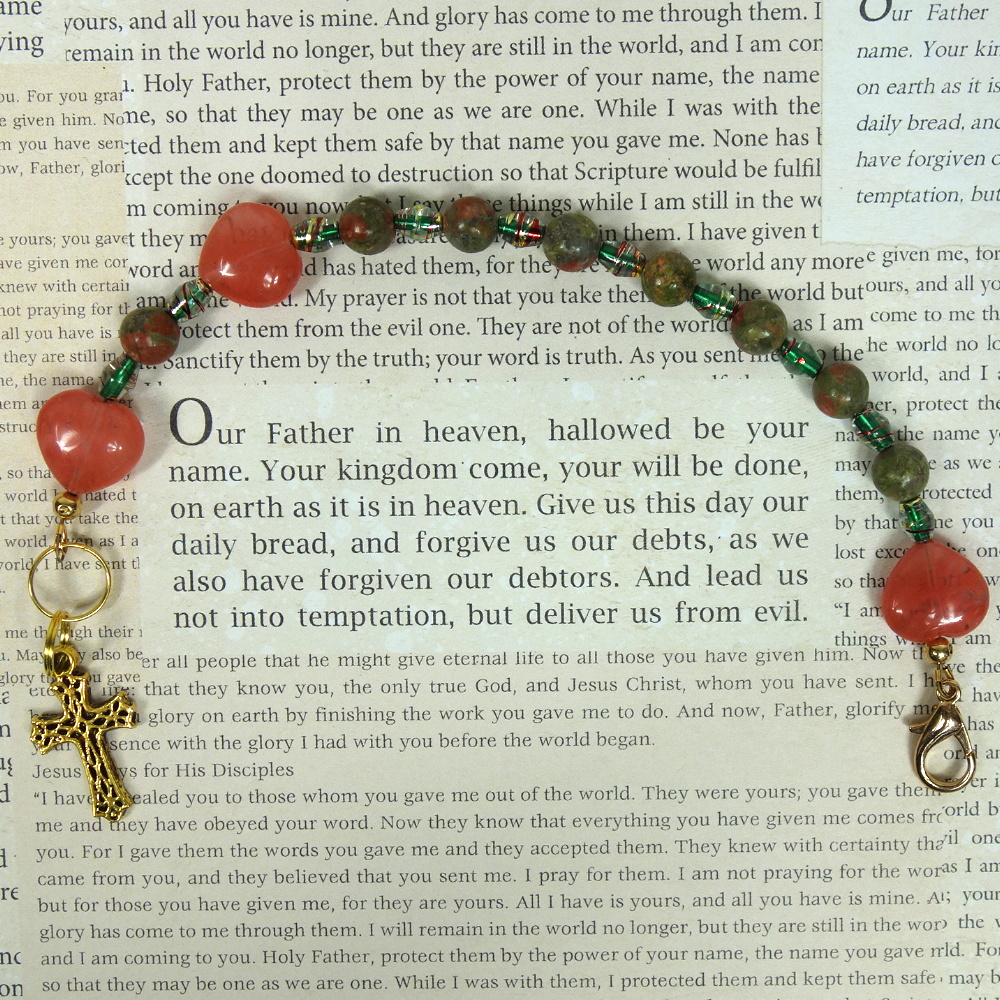
A chaplet uses a shorter strand rather than a full loop. Instead of moving continuously around a circle, prayer flows in a gentle back-and-forth pattern before returning to the cross.
This visual guide shows how prayer moves through a chaplet:
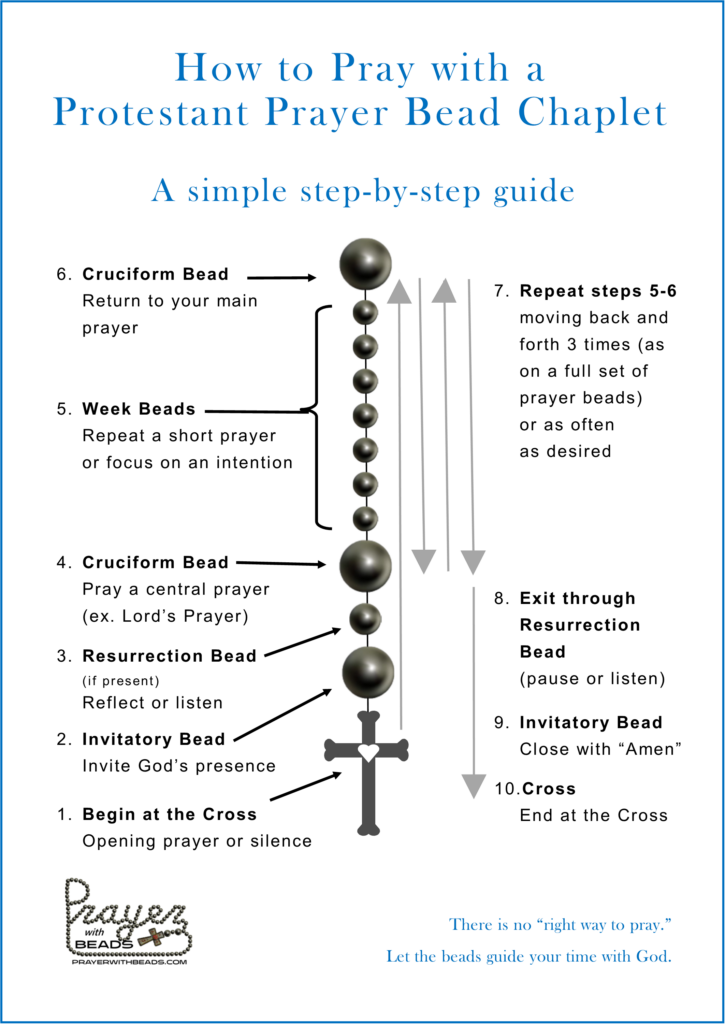
In a chaplet, the Week beads are not simply passed once. Instead, you move back and forth through them, including a Cruciform bead in each pass. This creates a steady rhythm that can be repeated as many times as desired.
For some, this shorter pattern feels simpler and more focused, especially when time is limited or when praying with a specific intention.
Some chaplets have a clasp on one end that may be attached to a link above the cross so the chaplet may be worn as a bracelet or attached to a purse strap or other location as a statement of faith and to keep the chaplet handy for prayer. A chaplet is also convenient to carry in a pocket, where just touching it can help one feel closer to God.
You can explore examples of chaplets here:
Protestant Prayer Bead Chaplets
Bracelets
Some sets are designed as double-stranded bracelets that include the full pattern of beads.
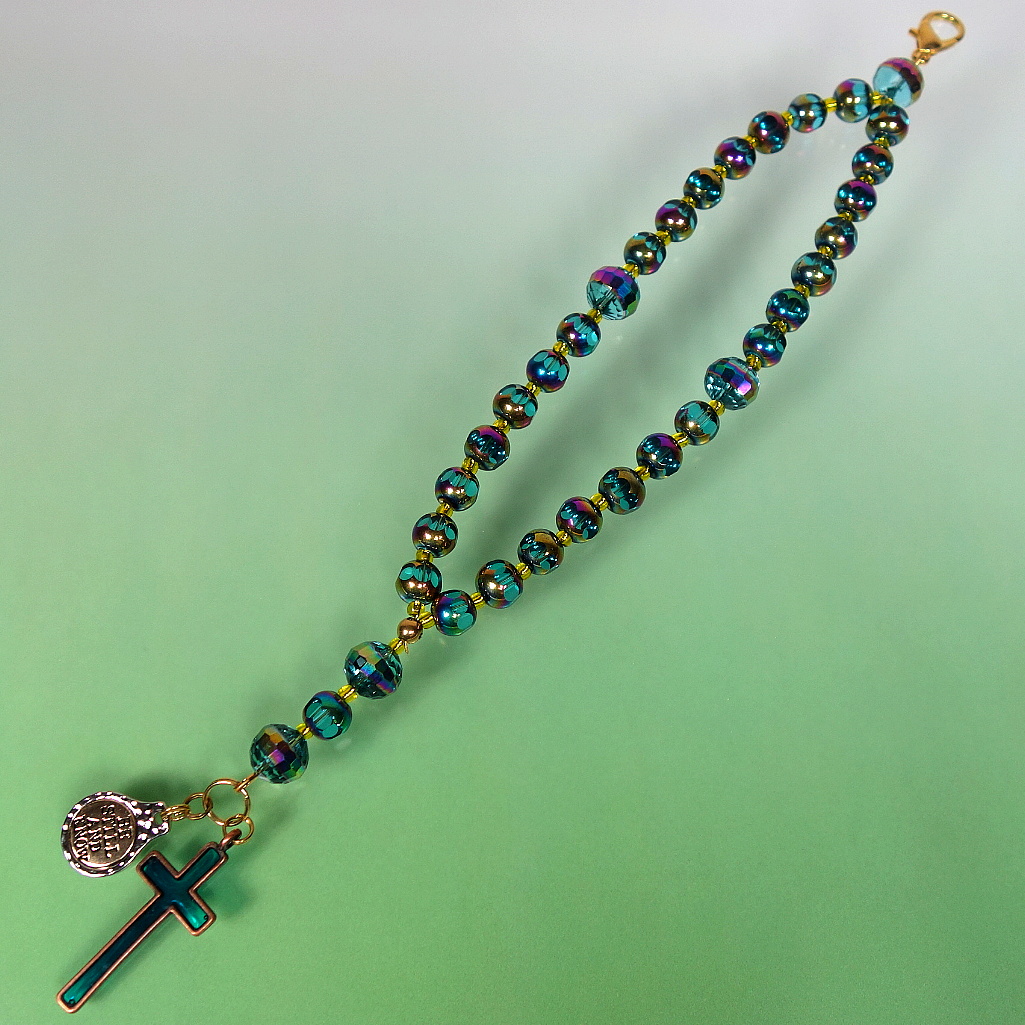
These allow you to keep the beads close at hand, whether for prayer or as a quiet reminder of your faith.
You can explore bracelet-style prayer beads here:
Protestant Prayer Bead Bracelets
Necklaces
Other sets are long enough to be worn as necklaces.
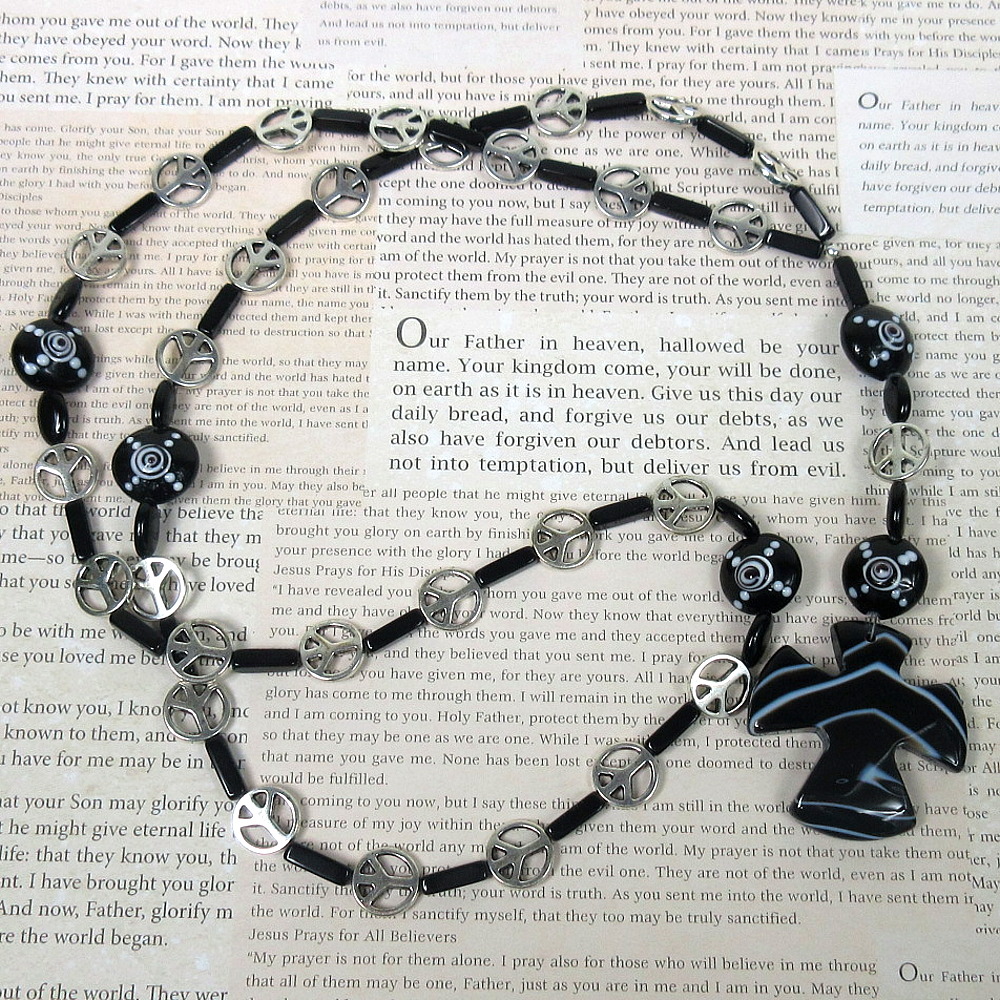
These can be used both during prayer and as a visible expression of faith.
View necklace-length prayer beads here:
Protestant Prayer Bead Necklaces
Shorter sets are designed to be held in the hand and used specifically during prayer.
Each form offers a slightly different way to incorporate prayer into daily life.
History of Protestant/Anglican Prayer Beads
Modern Protestant, or Anglican, prayer beads are widely associated with the Rev. Lynn Bauman and a contemplative prayer group in the Episcopal Church in the mid-1980s. Drawing inspiration from earlier Christian traditions that used prayer beads, they developed a pattern that is simple, flexible, and rooted in contemplative prayer.
The structure itself was designed with symbolic meaning. The 33 beads represent the years of Christ’s life on earth. When the circle is laid flat, the positions of the four Cruciform beads form the shape of the Cross, offering a quiet visual reminder at the center of the design.
Over time, the pattern spread beyond its original setting and came to be used by many Anglicans, Protestants, and other Christians seeking a more reflective approach to prayer.
Later public reporting about Bauman’s criminal case involving a child has troubled some Christians. For many, that history is painful and cannot be ignored. At the same time, many believers distinguish between the wrongdoing of an individual and the prayer practice itself, which has since been adopted, adapted, and used by others in faithful ways.
Today, these beads are used by many individuals and churches seeking a simple, adaptable way to deepen their prayer life.
How They Differ from the Catholic Rosary
Protestant prayer beads and the Catholic Rosary both use beads to guide prayer, but their approaches are different.
The Rosary follows a structured sequence of specific prayers and meditations rooted in long-standing Catholic tradition.
Protestant prayer beads are intentionally open and flexible. There are no required prayers, and the structure is simpler.
The emphasis is on creating space for personal prayer rather than following a prescribed format.
Who They Are For
Protestant prayer beads are for anyone seeking a more focused and intentional prayer life.
They may be especially helpful for those who:
- Struggle to stay focused in prayer
- Prefer a quiet, reflective approach
- Want flexibility rather than fixed prayers
- Desire a simple daily rhythm of prayer
They can be used individually, in small groups, or within church settings.
Recommended Resources
If you would like to explore further, these resources may be helpful:
- Books by Lynn Bauman on prayer and spiritual practice
- Episcopal and Anglican prayer resources available through The Episcopal Church
- Articles and guides on contemplative prayer practices
You may also find it helpful to use guided, topic-focused prayer sessions designed to follow the rhythm of the beads.
Explore guided prayer videos here:
Guided Prayer Video Library
Sources
- The Episcopal Church
- Writings and teachings of Lynn Bauman
- Writings by Kristen E. Vincent
- Historical overviews of Anglican prayer practices and modern contemplative prayer movements
As you begin to explore using prayer beads, you may find that having your own set helps make this practice more personal and consistent.
Where to Find Protestant Prayer Beads
Protestant prayer beads are available in a variety of styles and forms, including full sets, chaplets, bracelets, and necklaces.
Some people prefer simple, minimal designs. Others are drawn to beads that are handcrafted with particular care and attention to detail.
Because prayer beads are something you will hold and return to often, it can be helpful to choose a set that feels comfortable in your hands and meaningful to your personal prayer life.
Materials, size, and spacing can all affect how the beads feel during prayer. Some people prefer smaller, more subtle beads. Others appreciate larger beads that are easier to move through slowly and deliberately.
If you are exploring prayer beads for yourself, you may wish to begin with a set that is designed specifically for contemplative prayer, with a clear and balanced structure.
If you would like to begin your own prayer practice, you can explore handcrafted Protestant prayer beads here:
Protestant prayer beads designed for contemplative prayer
Each set is uniquely created, offering a slightly different experience in prayer.
A Gentle Invitation to Explore Prayer Beads
Prayer beads are not about getting everything right.
They are simply a tool to help you slow down and spend time with God.
You may find that, over time, they become a quiet and steady companion in your prayer life.
If you are curious, begin simply. Hold the beads, take a breath, and start with a single prayer.
Frequently Asked Questions
Do I have to follow a specific set of prayers?
No. Protestant prayer beads are intentionally flexible. You may use any prayers or reflections that are meaningful to you.
How long should I pray with the beads?
There is no set length. You may pray through the beads once or continue for several rounds.
What is the purpose of the different bead types?
Cruciform beads often mark a central theme or category of prayer. Week beads may be used to repeat a prayer or to explore subcategories within that theme.
For example, a Cruciform bead might focus on confession, while the following Week beads guide reflection on specific areas such as omission, pride, or other struggles.
Do I need a cross pendant?
No. While many sets include a cross, the pendant can be any symbol that is meaningful to your faith.
Can beginners and children use Protestant prayer beads?
Yes. They are simple to learn and can be adapted to any level of experience.
What is the Resurrection bead used for?
It is optional. Since the 33 beads represent Christ’s life on earth, the Resurrection bead represents His life after death.
Some use it as a place for reflection, listening, or focusing on themes of hope and new life.
Does the history of Protestant prayer beads affect whether I should use them?
Some people have questions after learning about the modern origins of Protestant or Anglican prayer beads. The pattern is commonly associated with the Rev. Lynn Bauman and a contemplative prayer group in the 1980s, and later public reporting about his criminal case involving a child has been difficult for many.
For some, this raises concerns about using the beads. Others focus on the fact that prayer beads are simply a tool for prayer, and that the broader Christian practice of using physical objects to guide prayer long predates their modern form.
Each person is free to approach this prayerfully and thoughtfully. What matters most is whether the practice helps you draw closer to God in a sincere and meaningful way.
This post is designed to serve as a reference you can return to over time as your prayer practice grows and deepens. Download the following quick guide to print and have handy when you are learning to pray with your beads.
Explore Other Types of Prayer Beads
If you are interested in learning more about prayer beads from other traditions, you may also find these helpful:
👉 Tasbih (Islamic prayer beads)

