
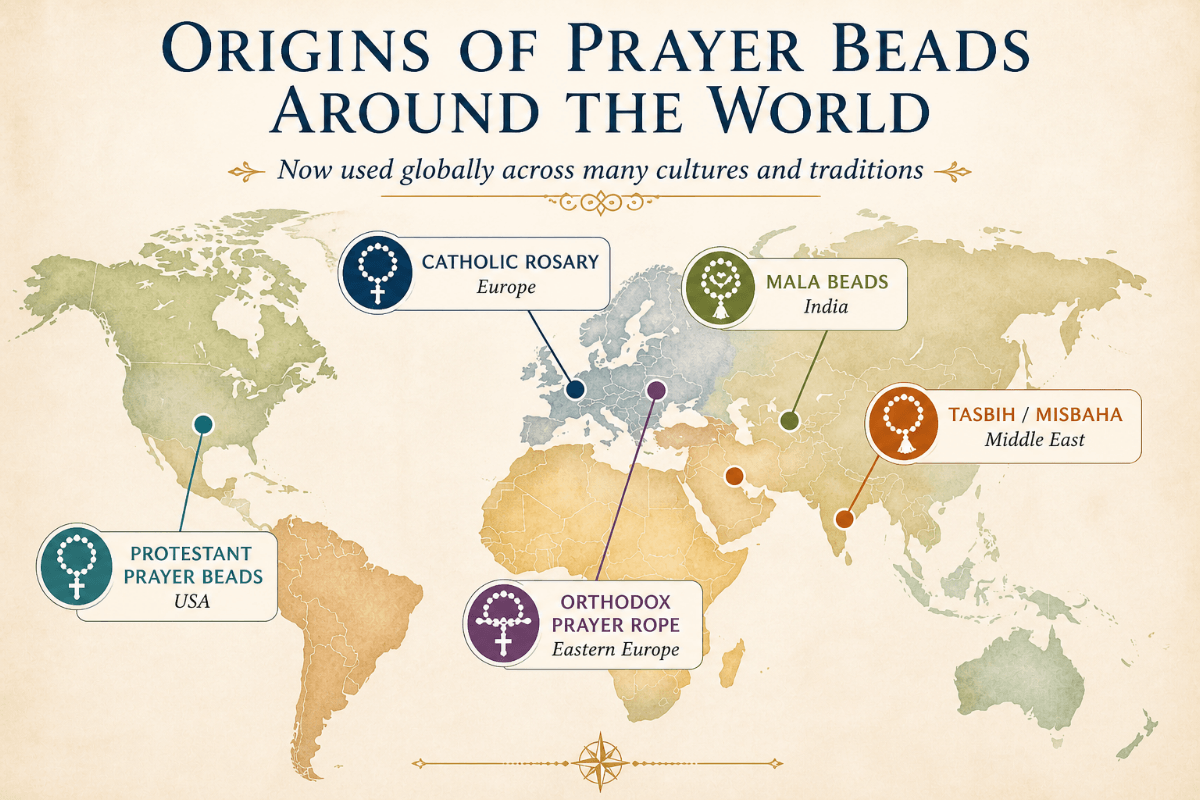
Prayer beads are used by Christians around the world—but not all prayer beads are the same.
Each tradition has developed its own form, rhythm, and purpose. Understanding these differences can help you choose a prayer practice that feels meaningful and natural to you.
👉 To make this simple, I’ve created a one-page comparison chart you can download and keep nearby as you explore.
If you’re new to prayer beads, you may also want to start here:
👉 What Are Protestant Prayer Beads
The Most Common Types of Prayer Beads
Below is a simple overview of the most common types of prayer beads used around the world. Each one reflects a different tradition, rhythm, and approach to prayer.
✝️ Catholic Rosary
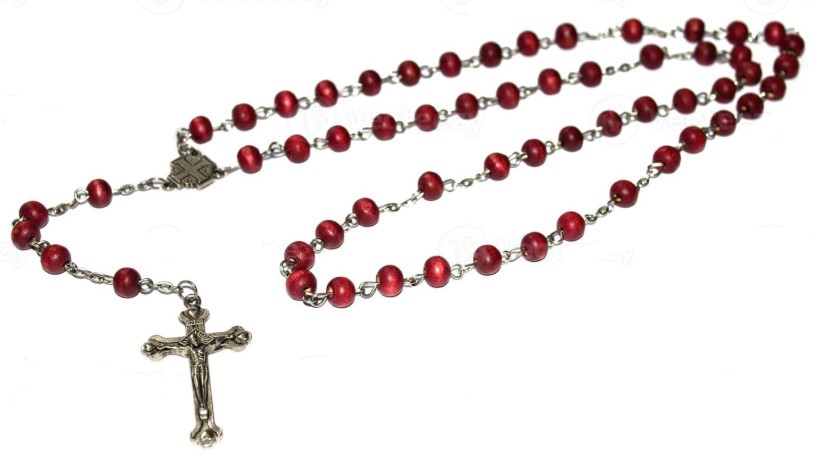
The Catholic Rosary is one of the most widely recognized forms of Christian prayer beads. It is used for repeating patterns of prayer and meditation.
A standard rosary has 59 beads, arranged in a loop with a bead tail and crucifix. The loop is organized into five groups of ten beads, called decades. Each decade is associated with a specific event in the life of Jesus and Mary, known as a mystery.
As the beads are prayed, the user moves through a sequence that includes the Apostles’ Creed, the Lord’s Prayer, the Hail Mary, and the Glory Be. This creates a rhythm of prayer that combines spoken repetition with quiet reflection.
This structured approach is very different from more flexible systems like Protestant prayer beads.
Unlike those and some other prayer bead traditions, the Rosary follows a set devotional pattern, guiding both the words and the focus of prayer.
This combination of repetition and reflection helps many people enter a deeper, more meditative form of prayer.
👉 Learn how the Catholic Rosary is structured and prayed
✝️ Protestant / Anglican Prayer Beads

Protestant prayer beads, also known as Anglican prayer beads, are a more recent form of Christian prayer beads designed to support flexible, contemplative prayer.
A typical set has 33 beads (sometimes 34 when an optional Resurrection bead is included), arranged in a loop with a cross or other pendant. The beads are organized into four larger Cruciform beads and four groups of seven smaller Week beads, creating a gentle rhythm for prayer.
Unlike structured systems, like the Catholic Rosary, these beads have no single required sequence of prayers. The beads can be used in a variety of ways, including repeated phrases, scripture meditation, or personal prayer.
Because of this flexibility, Protestant prayer beads are often used to help slow down, stay focused, and create space for intentional prayer.
This is the style of prayer beads featured throughout PrayerWithBeads.com.
👉 Explore how Protestant prayer beads are structured and used in prayer
A Simple Way to Begin
If you’re curious about trying prayer beads but aren’t sure where to start, Protestant prayer beads offer one of the most flexible entry points.
You can use them with:
• simple repeated prayers
• scripture meditation
• or quiet, personal reflection
☪️ Tasbih (Islamic Prayer Beads)
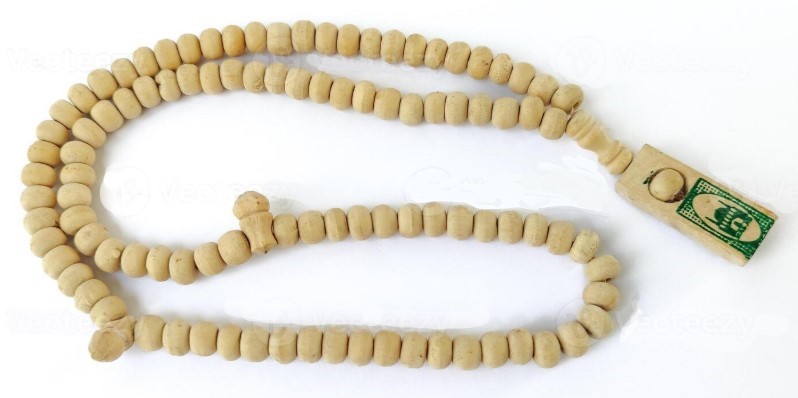
Tasbih (pronounced taz-BEEH) are Islamic prayer beads used in the remembrance of God, known as dhikr.
They are typically made with 33, 34, or 99 beads, often arranged in sections to guide repeated recitations.
During use, a person quietly repeats short phrases such as Subhan Allah (Glory be to God), Alhamdulillah (Praise be to God), and Allahu akbar (God is greatest), moving one bead at a time.
Rather than following a fixed devotional sequence, tasbih support a steady rhythm of remembrance, helping the user stay focused and present in prayer.
They are often used after formal prayers or during personal devotional time.
In addition to traditional bead strands, some Muslims use small handheld or finger-worn counters as a modern alternative for keeping track of dhikr recitations. While these devices serve the same functional purpose, many still prefer traditional tasbih beads for their tactile and contemplative qualities.
👉 Learn more about tasbih structure and how they are used in Islamic prayer
🧘 Mala (Hindu, Buddhist, and Sikh Prayer Beads)
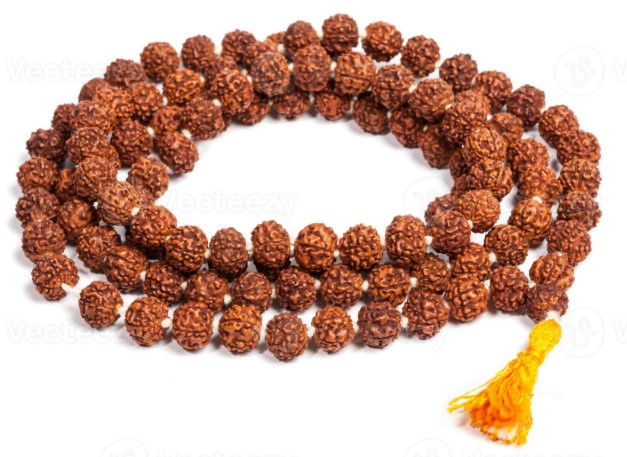
A mala is a strand of prayer beads used in Hindu, Buddhist, and Sikh traditions for meditation and mantra repetition.
A traditional mala contains 108 beads, often with a larger “guru bead” that marks the beginning and end of the cycle.
During practice, a person repeats a mantra—either silently or aloud—moving one bead at a time to maintain focus and rhythm.
Unlike some structured prayer systems, malas are used as a tool for meditation, helping quiet the mind and deepen spiritual awareness.
While the specific beliefs and practices vary between Hindu, Buddhist, and Sikh traditions, the underlying purpose is similar: sustained attention, repetition, and inner stillness.
👉 Read more about malas and how they are used in meditation
🪢 Orthodox Prayer Rope
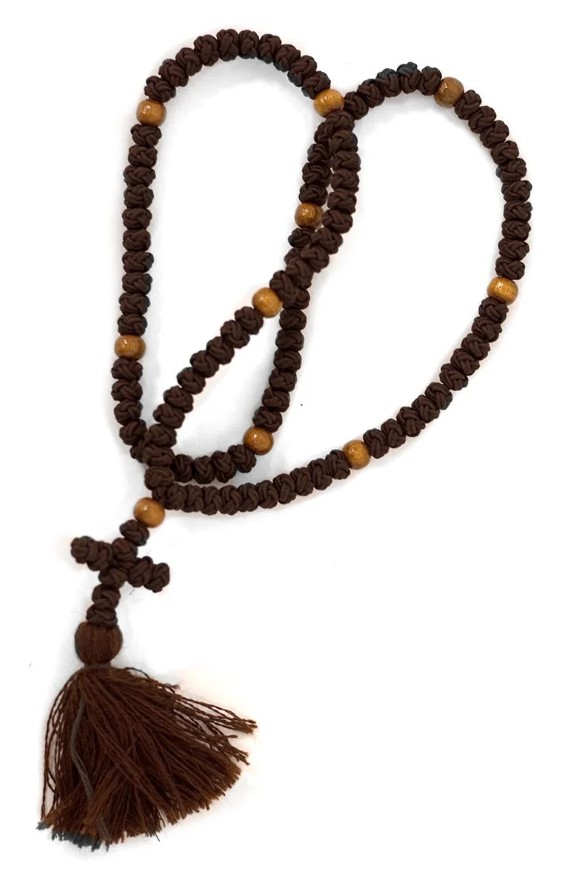
The Orthodox prayer rope is a knotted cord used in Eastern Orthodox Christianity for repetitive prayer.
Instead of beads, it is made of carefully tied knots—often formed in patterns that carry symbolic meaning.
It is most commonly used to repeat the Jesus Prayer:
“Lord Jesus Christ, Son of God, have mercy on me.”
As the user moves from knot to knot, the repetition helps cultivate humility, focus, and continual prayer throughout daily life.
Prayer ropes are often used quietly and personally, either during dedicated prayer time or woven into everyday activities.
👉 Learn how prayer ropes are used in Orthodox Christian prayer
✨ Additional and Less Common Prayer Beads
While the bead types above are the most widely used, a few other forms of prayer beads and bead-like tools are worth noting for a more complete picture.
Bahá’í Prayer Beads are used within the Bahá’í Faith as part of a daily devotional practice. A standard set includes 95 beads arranged in a simple strand. These beads are used to recite the phrase “Alláh-u-Abhá” 95 times each day, serving as a structured and consistent expression of remembrance and devotion.
Komboloi (Greek Worry Beads) are often mistaken for prayer beads, but they are primarily a cultural rather than religious object. Typically consisting of 16 to 23 beads on a loose strand with a spacer and tassel, komboloi are used for relaxation and stress relief rather than formal prayer. Their inclusion here reflects the broader human tendency to use rhythmic, repetitive movement as a way to focus the mind.
These examples highlight how bead-based tools can serve different purposes across traditions—from structured devotional practice to simple mental focus—even when they are not all used in the same way or for the same spiritual goals.
How Prayer Beads Are Different
While all prayer beads serve a similar purpose, the way they are used can vary significantly across traditions.
Some, like the Catholic Rosary, follow a structured sequence of prayers tied to specific events or meanings.
Others, like tasbih and prayer ropes, focus on repeating short phrases or prayers, helping the user stay centered and attentive.
Still others, like malas, are used for meditation and mantra repetition, emphasizing stillness and inward focus.
👉 At their core, all prayer beads serve the same purpose: helping you slow down, focus, and engage more deeply in prayer or meditation.
Each of these traditions offers a meaningful way to engage in prayer.
But if you’re looking for something that provides structure without prescribing specific words, there is another approach worth exploring.
What Makes Protestant Prayer Beads Unique
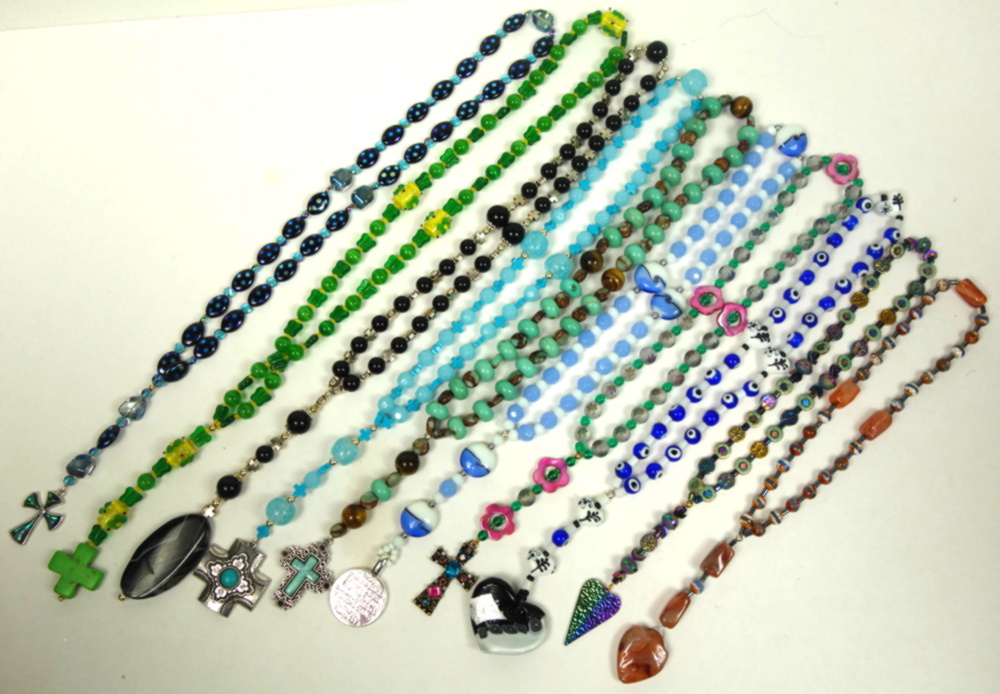
Protestant prayer beads (sometimes called Anglican prayer beads) take a different approach.
They use a similar physical form—but a more flexible approach to prayer.
Instead of telling you what to pray, they provide a rhythm without prescribing content. They allow complete flexibility, and support a more personal, relational approach to prayer.
There are:
- No required prayers
- No fixed system
- No right or wrong way to use them
Their purpose is not to guide your words—
but to support your relationship with God.
Want Help Getting Started?
If this more flexible approach to prayer resonates with you, I create handcrafted Protestant prayer beads.
- Each set is designed to support regular prayer and those during real-life challenges like:
- Fear
- Health concerns
- Waiting seasons
You can also explore my topic-focused prayer videos, created specifically to be used with the beads.
Compare All Prayer Beads at a Glance
To make this easier, I’ve created a simple, one-page guide comparing the most common types of prayer beads.
✔ See bead counts and structure
✔ Understand how each type is used
✔ Quickly compare traditions side by side
👉 Download the Prayer Beads Comparison Guide
Where to Go Next
Now that you’ve seen the different types of prayer beads, you might want to explore one in more depth:
👉 Tasbih (Islamic prayer beads)
👉 Mala (Hindu, Buddhist, and Sikh prayer beads)
👉 Orthodox Christian Prayer Rope
Or, if you’re ready to begin:


As the child of a Catholic and a Protestant, your post really meant a lot to me. You helped me find a way to pray that feels true to both sides of my family and honors my parents at the same time. Thank you for sharing this.
Thanks for your comment! I’m so glad this post was helpful to you!