
If you’ve been exploring prayer beads—especially as a Protestant—you’ve probably come across Anglican prayer beads and Protestant prayer beads and wondered:
Are they actually different, or just called different names?
The answer is subtle but important. The difference is less about structure and more about theology, flexibility, and intent.
The Core Difference in One Sentence
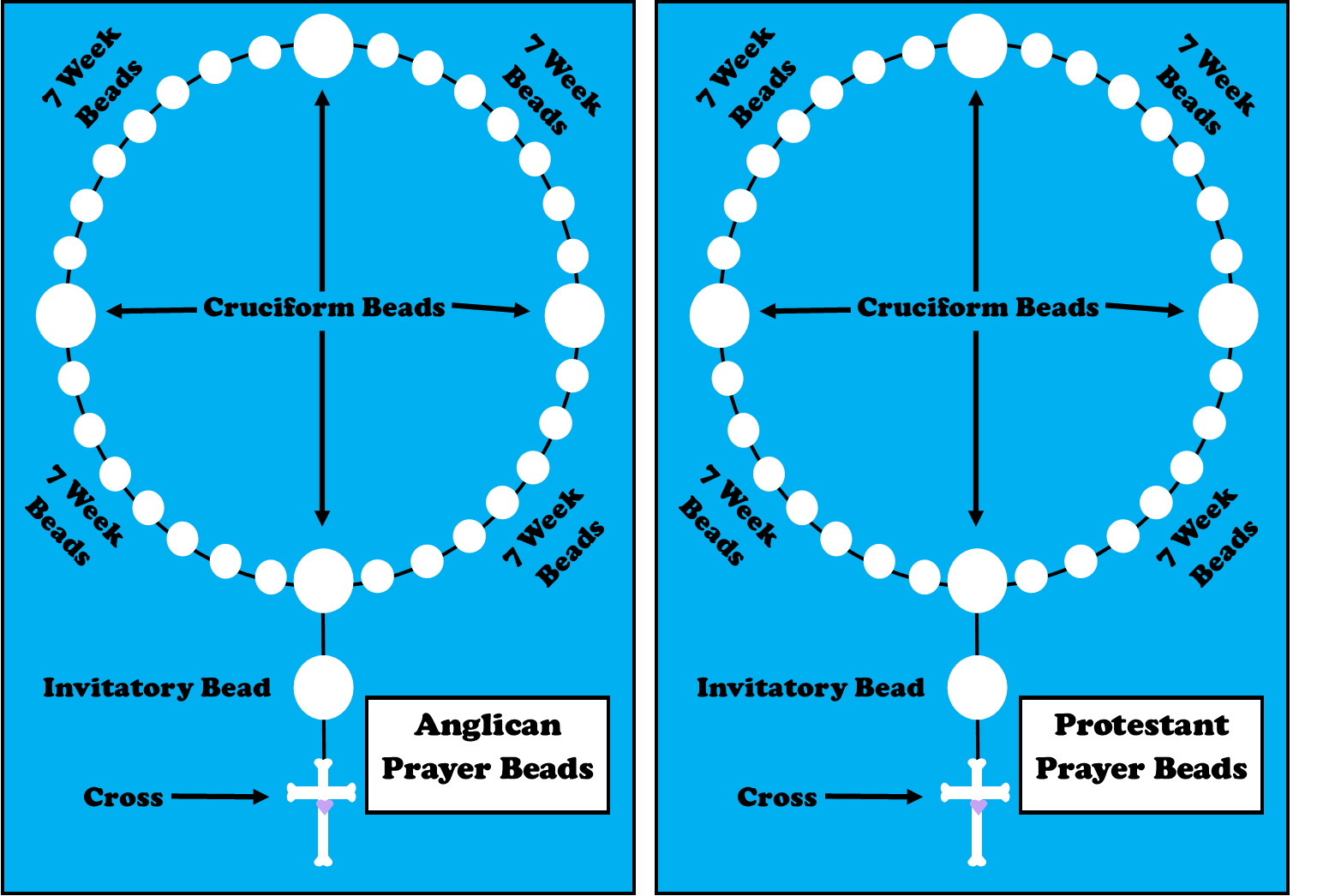
Anglican prayer beads come from a defined liturgical tradition, while Protestant prayer beads are intentionally adaptable and personalized in how they are used. Their bead patterns are essentially the same. For details, see this blog post.
Where Anglican Prayer Beads Come From
Anglican prayer beads originated in the 1980s within the Anglican (Episcopal) tradition as a way to reintroduce tactile prayer into Protestant life.
They were designed to:
- Provide a structured, non-Catholic alternative to the rosary
- Encourage contemplative prayer
- Reflect Anglican theology, which balances Scripture, tradition, and reason
Because of this, Anglican beads have a standardized structure:
- 33 beads total
- 4 “weeks” (groups of 7 beads)
- 4 cruciform beads
- 1 invitatory bead
- Typically a cross pendant
This structure supports a rhythmic, repeated pattern of prayer, often using written or traditional prayers.
Where Protestant Prayer Beads Come From
Unlike Anglican prayer beads, Protestant prayer beads don’t trace back to a single founding moment or authority.
Instead, they developed organically.
Their Starting Point
Most Protestant prayer beads are directly inspired by Anglican prayer beads.
As the practice spread beyond Anglican circles, Christians from a wide range of Protestant backgrounds began using them—but with a different mindset.
How They Became Distinct
Rather than adopting a fixed system, Protestant users began to:
- Use the beads without prescribed prayers
- Adapt how each bead was used in prayer
- Add personal meaning to the pendant or design
- Occasionally include a Resurrection bead
Over time, this created something distinct—not a new structure, but a new approach.
What Makes Protestant Prayer Beads Different
Protestant prayer beads are not tied to a single tradition or authority structure—but in practice, they almost always retain the Anglican 33-bead pattern.
The difference lies in how they are used.
1. Shared Structure, Flexible Meaning
- Typically 33 beads, though some have an additional Resurrection bead between the Invitatory and first Cruciform beads. (Kristi Lyn Glass’s prayer beads all have a Resurrection bead.)
- Includes the same basic bead pattern as Anglican beads
- Meaning is not assigned universally, but shaped by the individual
2. No Required Prayer System
There is no single “correct” way to use Protestant prayer beads.
They can be used for:
- Scripture meditation
- The Jesus Prayer
- Spontaneous prayer
- Written prayers
- Silence and listening
- Breath prayer
- Worship or gratitude
The beads serve the prayer—not the other way around.
3. Pendant Freedom
- Often includes a cross
- May also include:
- A Resurrection symbol
- A meaningful charm
- A personally significant object
4. Personal, Not Prescribed
There is no governing body defining:
- What each bead represents
- What prayers should be used
- How the beads must be structured (beyond the commonly retained pattern)
This reflects a core Protestant emphasis: freedom in approaching God in prayer.
Side-by-Side Comparison
| Anglican Prayer Beads | Protestant Prayer Beads |
|---|---|
| Fixed 33-bead structure | Usually 33 beads (same structure) ; optional Resurrection bead |
| Rooted in Anglican tradition | Not tied to a denomination |
| Often uses written prayers | Can use any prayer style |
| Cross pendant standard | Pendant may vary |
| Shared system of use | Individually adapted use |
Why This Difference Matters
This distinction reflects a deeper theological difference.
Anglican Approach
- Values shared forms and historic continuity
- Encourages unity through common prayer
Protestant Approach
- Emphasizes personal relationship with God
- Allows freedom in how prayer is practiced
A Simple Way to Think About It
- Anglican beads = a guided path
- Protestant beads = a flexible tool
Both lead toward deeper prayer—they just get there differently.
Final Thought
If you’re Protestant and exploring prayer beads, you’re not stepping into something rigid or prescribed.
You’re stepping into a practice that can be:
- As structured or unstructured as you need
- As traditional or personal as you want
- As simple or as meaningful as your relationship with God calls for
And that flexibility isn’t a compromise—it’s the strength of the practice itself.
If you’re ready to explore further, the next step is learning how to use prayer beads in a way that feels natural, meaningful, and deeply personal.

